

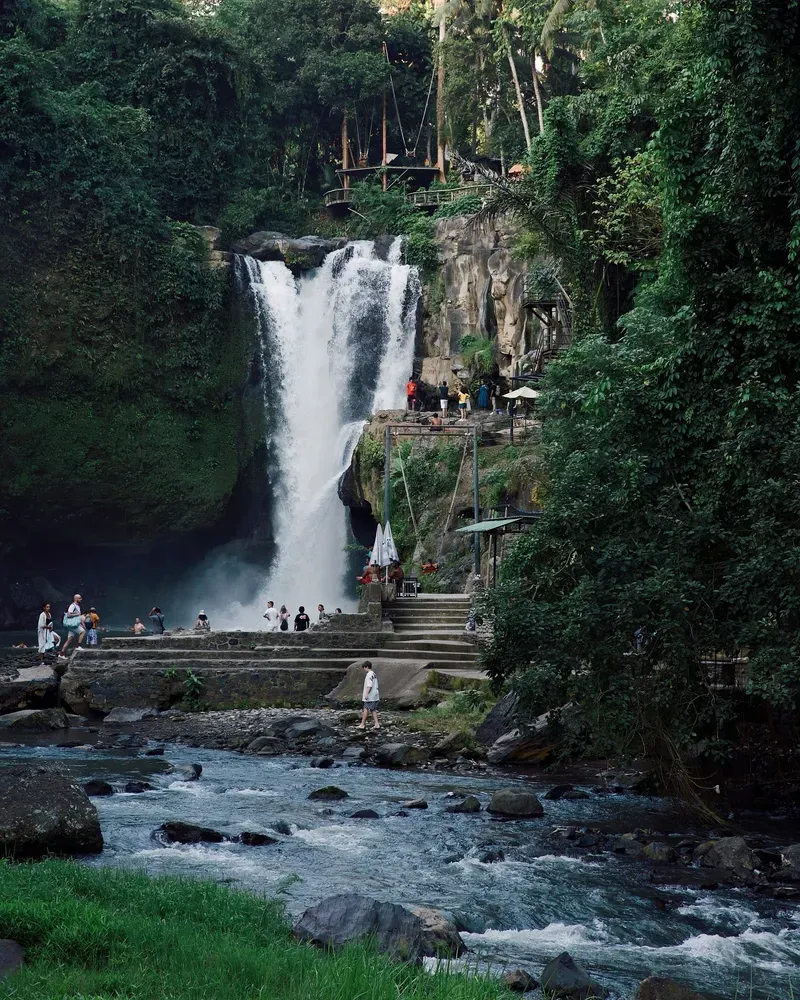
Tegenungan Waterfall plunges 15 meters into a wide natural pool along the Petanu River. Visitors descend 168 concrete steps to reach the base, where they can swim during the dry season or observe local cleansing rituals at the adjacent Beji Temple.
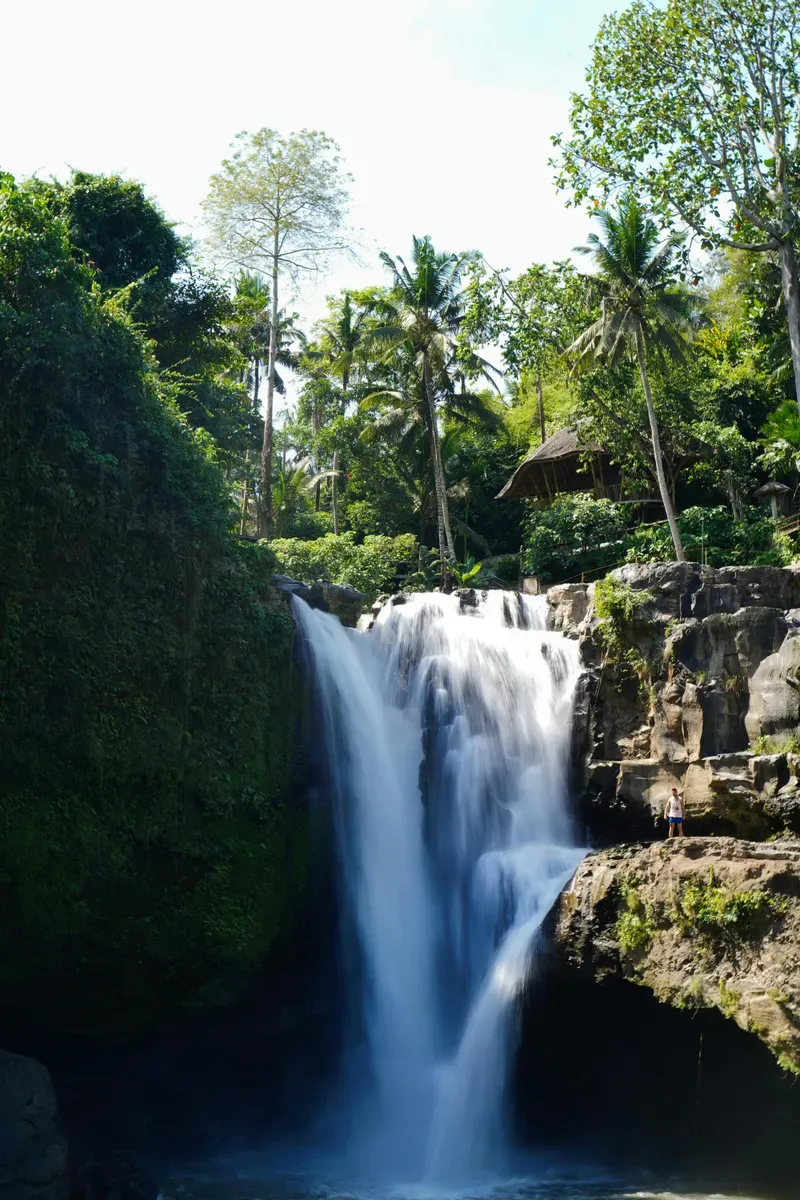
Find Guided ToursTegenungan Waterfall, also known as Blangsinga Waterfall, is a powerful cascade located in a humid tropical valley in south-central Bali. Unlike many of the island's waterfalls located in the northern highlands, Tegenungan sits at an elevation of approximately 90 meters above sea level. This low-lying position makes it highly accessible for visitors staying in Ubud and the southern tourist hubs. The main drop plunges 15 meters into a wide natural pool measuring roughly 30 meters in diameter.
The waterfall is fed continuously by the Petanu River. This waterway originates far to the north in the highlands of Kintamani and flows for 46.96 kilometers before surging over the cliff face at Tegenungan. As a result, it stands out as the tallest and most voluminous waterfall in the immediate vicinity of Ubud.
The history of the site traces back to the 16th-century Bangli Kingdom. During this era, the area was already recognized as a place of immense spiritual power. Local legends maintain that water spirits protect the falls. Today, the site retains deep spiritual significance for the Balinese community. Locals revere the area for its perceived healing properties and utilize it as a sacred space for meditation.
At the base of the falls lies the Beji Temple, which features a holy spring used for traditional purification and cleansing rituals. Over recent decades, the location has transitioned from a hidden local bathing spot into a highly developed natural attraction. It is currently managed jointly by the administrations of Kemenuh and Blangsinga villages.

Discover the full history and cultural significance on our About page.
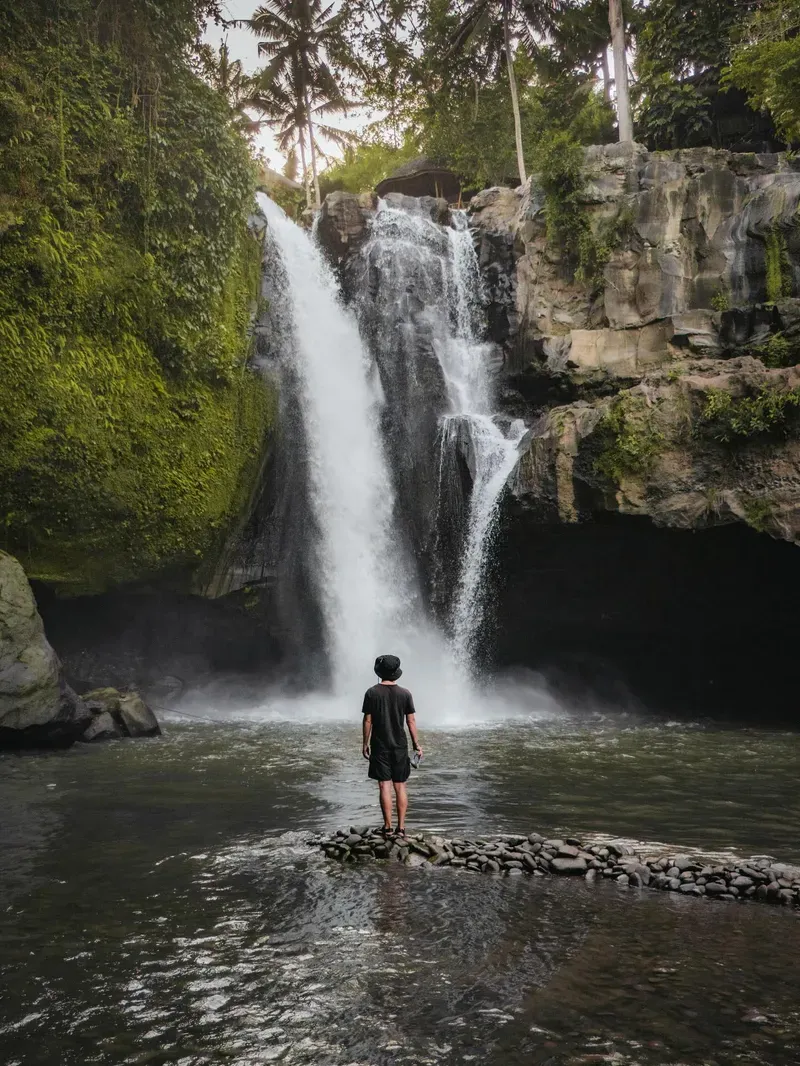
The 15-meter cascade drops into a wide plunge pool measuring approximately 30 meters across. During the dry season from April to October, the water runs clear and fresh. Visitors can safely swim here, though strong currents near the actual drop require caution and attention to lifeguard instructions.
Located at the base of the falls, this holy spring holds deep spiritual significance for the local Balinese community. Locals use the site for cleansing rituals and meditation. Bring a sarong and sash to enter these cordoned-off spiritual zones and observe the traditions respectfully.
A separate path allows visitors to climb past the 168 concrete steps to reach the very top of the waterfall. This elevated vantage point provides a quieter perspective of the Petanu River valley and the powerful 15-meter drop, keeping you away from the main crowds at the base.
Venues like Omma Day Club and D'tukad River Club sit directly beside the falls. They feature infinity pools, dining, and unobstructed views of the cascade. Omma Day Club even provides an elevator for visitors wanting to skip the steep 168-step climb back to the top parking area.
Hand-picked tours with free cancellation and verified reviews
 Free Cancellation 8h
  Free Cancellation
  Free Cancellation 8h
  Free Cancellation
  Free Cancellation 8h 30min
  Free Cancellation
  Free Cancellation
  Free Cancellation 10h
 The optimal time to visit Tegenungan Waterfall is between April and October during the dry season, when the water is clear and the 168 concrete steps are safe to descend. Arrive before 08:00 AM on a weekday to bypass the large tour groups that arrive later in the morning.
March brings rainy conditions with murky water and slippery steps. April and May transition into the dry season, offering clearer water and safer trekking down the 168 concrete stairs.
These dry season months provide optimal conditions. The natural plunge pool runs clear and fresh, while the steep descent is dry and significantly less slippery than during wetter months.
September and October maintain excellent dry season conditions with clear water. November marks the rainy season onset, bringing murky brown water and increasing the risk of dangerous flash floods.
The peak rainy season turns the waterfall brown and silty due to agricultural runoff. Heavy rains make the descent extremely slippery and swimming in the pool highly dangerous.
Tegenungan Waterfall is open daily from 06:30 to 18:30. The site officially closes in the evening, meaning night visits to the waterfall itself are not permitted, although adjacent private day clubs maintain later hours. Arriving before 08:00 is recommended to avoid large tour groups.
| Category | Price |
|---|---|
| General Entry (Adult) | 20,000 IDR |
| Professional Photoshoot Permit | 300,000 IDR |
| Scooter Parking | 5,000 IDR |
No advance bookings or permits are required for general admission. Tickets must be purchased on-site using cash (IDR), as credit cards are rarely accepted at the ticket booth.
For complete schedules and ticket prices, visit our Hours & Fees page.
Tegenungan Waterfall is uniquely situated in a low-lying valley in south-central Bali, making it highly accessible from major hubs. Visitors can reach the site easily from Ubud, Denpasar, or the southern coastal areas via scooter, private driver, or public transit.
📍 Kemenuh Village, South-Central Bali
Renting a scooter provides the most flexible way to reach the waterfall from Ubud Center. Riders should head east along Jalan Raya Ubud and then turn south toward Kemenuh village. The 10-kilometer route is straightforward and takes less than half an hour. Upon arrival, expect to pay a nominal parking fee of 5,000 IDR.
Hiring a private driver is ideal for families or visitors looking to avoid navigating heavy Bali traffic. This service typically includes return transport and waiting time while you explore the waterfall. The drive covers roughly 10 kilometers starting from Ubud Center. It offers a comfortable alternative to riding a scooter, allowing you to relax during transit.
Visitors traveling from Denpasar can easily book a ride-hailing app like Grab or a standard taxi. The 18-kilometer route provides direct transport to the site via Jalan Ir. Sutami. Fares will fluctuate depending on current traffic conditions and application demand at the time of booking. This option provides a convenient transfer without the need to negotiate full day rates.
Budget-conscious travelers staying in Kuta or Sanur can utilize the Trans Metro Dewata bus system. Passengers need to board Corridor 4 and ride the bus to the Sakah, or Patung Bayi, stop. The total transit distance spans approximately 30 kilometers. From the bus stop, you must hire a short scooter taxi, known locally as an Ojek, to reach the main entrance.
For detailed transport options and routes, visit our Directions page.
Large tour groups typically arrive at the waterfall after 10:00 AM. Arriving early guarantees a quieter environment and better photography conditions. Schedule your visit on a weekday if possible. Weekends attract local families and can double the crowd size.
The ticket booth and surrounding local warungs rarely accept credit cards. You will need cash for the 20,000 IDR entrance fee. Keep smaller notes handy for additional expenses, such as the 5,000 IDR parking charge or the 5,000 IDR fee for using the changing rooms.
Reaching the base requires descending approximately 170 steep concrete steps. Once at the bottom, the rocks near the natural pool are covered in algae and extremely slippery. Sturdy sandals or water shoes are highly recommended for safety. The climb back up is strenuous in high humidity.
The base of the waterfall features the Beji Temple and a holy spring used for local purification rituals. While the waterfall itself has no formal dress code, entering the temple requires a sarong and sash. Always respect cordoned-off spiritual zones where locals may be performing ceremonies.
The main drop plunges 15 meters into a 30-meter wide pool, generating a heavy mist that carries far from the impact zone. Standard backpacks will get damp quickly. Store your phone and camera equipment in a dedicated dry bag. This is especially important if you plan to swim.
Visitors with mobility issues should avoid the 170-step descent. The base is not wheelchair accessible. Instead, head to the adjacent Omma Day Club. They operate an elevator that provides access to lower viewing platforms overlooking the falls without the strenuous climb.
Dating back to the 9th century, this Hindu temple contains ancient stone carvings and a dedicated meditation cave. It stands as a significant historical site close to the waterfall.
This serene curtain waterfall draws fewer crowds than the main drop at Tegenungan. The calm waters make it perfect for visitors wanting a quiet swim.
This sacred sanctuary contains ancient temples and serves as a habitat for over 1,000 long-tailed macaques. It provides an opportunity to observe local wildlife up close.
Read what travelers share about their experience visiting Tegenungan Waterfall — from practical tips to personal highlights.


The general entrance ticket costs 20,000 IDR for adults and is purchased on-site. You should bring exact cash in Indonesian Rupiah, as the ticket booth rarely accepts credit cards. Professional photoshoots require a specific permit fee of 300,000 IDR.
Tegenungan Waterfall is open daily from 06:30 to 18:30. Arriving before 08:00 AM is the most effective way to avoid large tour groups, which typically arrive after 10:00 AM. The dry season from April to October provides the clearest water for swimming.
The waterfall is located 10 kilometers from central Ubud, taking about 20 to 30 minutes by road. You can rent a scooter for around 50,000 IDR per day or hire a private driver for approximately 150,000 IDR.
Bring sturdy, non-slip sandals or water shoes because the algae-covered rocks at the base are highly slippery. Pack a waterproof dry bag to protect electronics from heavy mist. If you plan to visit the nearby Beji Temple, you will need a sarong and sash.
The base of the falls is not accessible for wheelchairs or strollers due to a steep descent of approximately 168 to 172 concrete steps. Visitors with mobility limitations can view the waterfall from the top-level parking area. Alternatively, the nearby Omma Day Club features an elevator granting access to lower viewpoints.
No advance bookings or permits are required for general entry. You purchase your tickets directly at the entrance gate upon arrival.
Swimming is permitted in the 30-meter wide natural plunge pool during the dry season. Access to the water is restricted during heavy rain when currents become dangerously strong or the water contains agricultural runoff. Do not attempt to swim directly under the 15-meter drop.
Basic changing rooms and toilets are available at the base of the waterfall for a small fee of around 5,000 IDR. Parking is often free, but attendants may charge a nominal fee of 5,000 IDR for scooters or 10,000 IDR for cars.
Browse verified tours with free cancellation and instant confirmation.
Find Tours